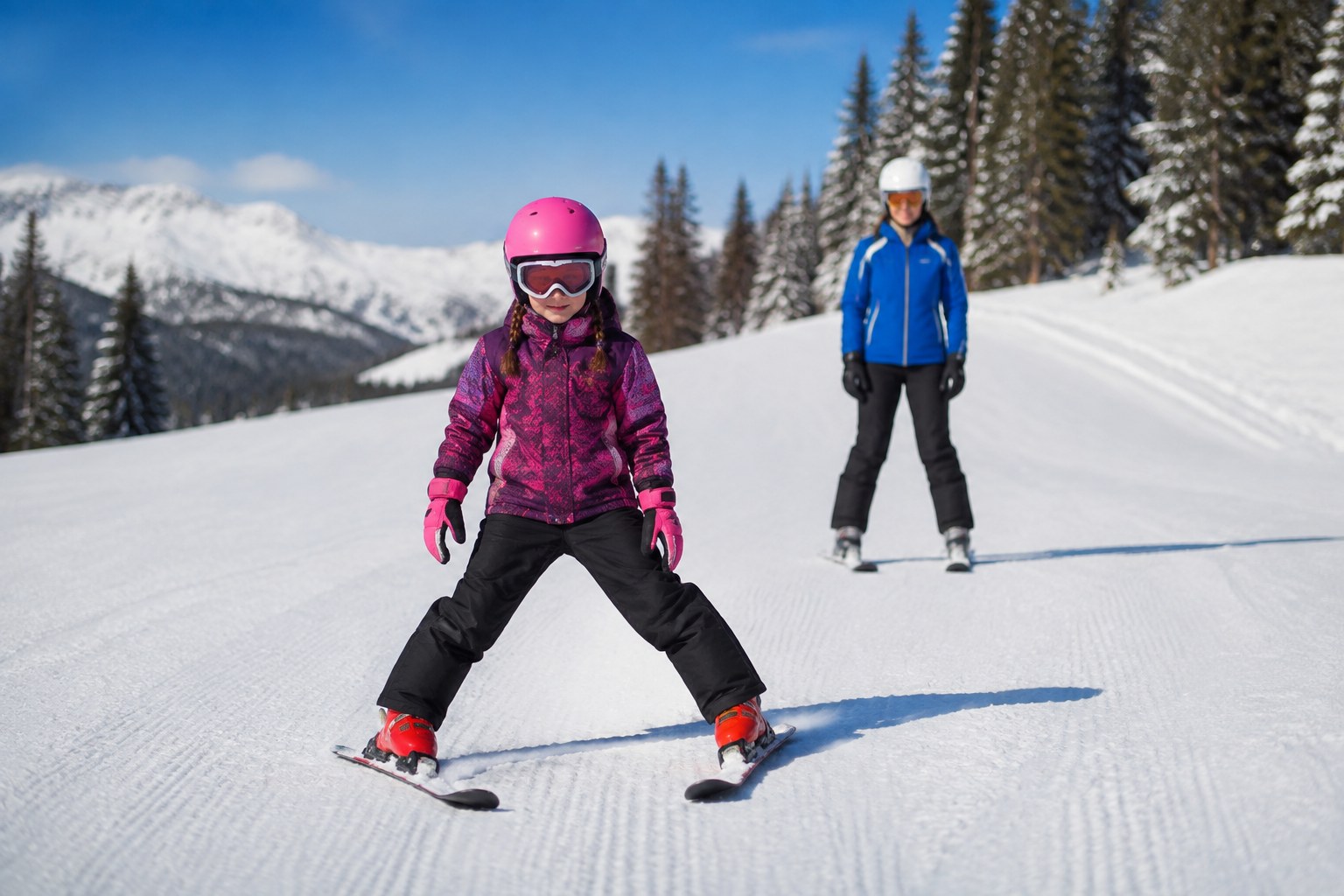
One of the first basic movements that beginners in skiing should learn is the snow plow technique. This basic position is where the front ends of the skis are brought closer together and the rear parts are kept more open; It helps the skier to reduce his speed, stop in a controlled manner, and learn to make left and right turns in later stages.
Getting up to speed is often not difficult, especially for first-time skiers; The main thing is to learn how to control speed. For this reason, in ski training, basic stance, snow plowing, slowing down and controlled stopping movements are generally practiced together at the beginning stage. Those who want to learn these moves practically in Erciyes can get detailed information about Erciyes ski lesson.
What is the Snow Plow Technique?
The snow plow is the basic skiing position in which the skis are brought together from the front and opened from the back, forming an approximate “V” shape. By increasing the contact of the inner edges of the skis with the snow, the skier can reduce his speed and stop in a controlled manner.
This technique is especially important at the beginner level because it allows the new skier to learn to control their skis rather than constantly accelerating down a slope. The snow plow isn’t just a stopping method; It is also used to learn basic speed control and first turns.
Learn Correct Skiing Stance First
Before switching to the snow plow, the body must be in a balanced skiing position. The knees should not be completely locked, they should be kept slightly bent. The body should be relaxed and balanced, and the weight should be distributed on both legs in a controlled manner.
One of the most common mistakes beginners make is leaning back in fear. Leaning back can make the skis harder to control. Instead, a stance should be aimed where the shin bone lightly touches the front of the ski boot, the knees remain flexible and the body is balanced.
Things to Consider in Basic Skiing Stance
- Keep your knees slightly bent.
- Do not lean your body forward or backward more than necessary.
- Stay balanced on your feet.
- Relax your shoulders.
- Turn your gaze towards the direction you want to move, not towards the tips of your skis.
Move Skis into Snow Plow Position
In the snow plow position, the front ends of the skis approach each other but should not touch each other. The back parts of the skis open outwards. Thus, the skis resemble a “V” shape when viewed from above.
When performing this movement, it is important to use the feet and legs in a controlled manner rather than pressing the knees together excessively. As the inner edges of the skis come into closer contact with the snow surface, friction increases and speed begins to decrease.
In the first exercises, it is more appropriate to perform the movement in a wide and safe starting area that is not too steep.
How to Slow Down with a Snow Plow?
Speed control in skiing can be learned by controlled changing the width of the snow plow position and the pressure applied to the edges of the ski.
When you open the backs of the skis a little more and increase the contact of the inner edges with the snow, your speed decreases. When you keep the position tighter, you allow the skis to move forward more.
The aim here is not to brake suddenly, but to gradually control your speed according to the slope and the area you are in.
Learning Cruise Control
- Work on very low slope area first.
- Do not close enough to cross the front ends of the skis.
- Apply even pressure to both skis.
- When you accelerate, increase the snow plow opening in a controlled manner.
- Don’t sit back in panic.
How to Ski with a Snow Plow?
When learning the ski stop movement, the snow plow position is gradually expanded and the contact of the inner edges of the skis with the snow surface is increased. When the speed drops sufficiently, the skier can come to a controlled stop.
Beginners often try to open the skis too much at once when they want to stop. Instead, doing the movement gradually provides a more controlled result.
As you approach your stop, first reduce your speed, then make the snow plow a little more noticeable and come to a complete stop. Sudden and uncontrolled stopping should be avoided, especially on busy tracks.
How to Learn Turning Right and Left with a Snow Plow?
Once you can slow down and stop in a controlled manner using the snow plow technique, the next step is to learn right and left turns. It is important not only to turn the skis during turns, but also to use weight and leg movements in a controlled manner.
During ski training, the skier’s weight transfer, knee orientation and body balance are worked together when turning from the basic snow plow position.
The first turns should be applied wide and slowly. As you can control your speed, a more fluid skiing technique can be developed by connecting turns together.
Why is Snow Plow Return Important?
Speed control in skiing is not only achieved by keeping the skis in braking position at all times. Making controlled turns left and right on the track also plays an important role in managing speed.
Sliding straight down the slope can cause speed to increase rapidly. Thanks to turns, the skier creates a more controlled route along the track and can manage the effect of the slope.
Therefore, working on snow plow turns after stopping with the snow plow in initial training is an important step in developing track control.
Do Not Let the Tips of the Skis Touch Each Other
During snow plowing, the front sections of the skis come close to each other, but it is not desired that the tips intertwine or cross. Crossing the tips of the skis can cause loss of balance.
Leaving a small and controlled distance between the two skis allows you to perform the movement more comfortably. Although it is natural to look at the position of the skis, especially in the first lessons, over time you need to learn to turn your eyes forward and towards your direction of movement.
Don’t lean back when accelerating
Beginner skiers may naturally tend to lean back when the speed increases. However, this movement can make the skis more difficult to control.
To stay in control on the skis, it is necessary to keep the knees flexible and keep the weight on the skis as balanced as possible. Light contact of the shin with the front of the boot can help maintain the basic ski position.
When your speed starts to bother you, instead of throwing your body back in panic, focus on slowing down in a controlled manner by increasing the snow plow opening.
On Which Track Should Beginners Practice the Snow Plow?
A steep or busy runway should not be preferred when learning the snow plow. The first studies should be done in areas that are as low-sloping as possible, wide and suitable for beginners.
After the skier starts to slow down and stop at any point with the snow plow and make basic turns in a controlled manner, he can move on to longer tracks suitable for his level.
You can review our content rules to be considered before starting skiing and snowboarding for the basic preparation and safety issues that should be applied before hitting the track.
Most Common Mistakes in Snow Plow Technique
| Error | Right Approach |
|---|---|
| Leaning back | Maintaining a balanced and slightly forward active ski position |
| Crossing the ski tips | Leaving controlled distance between front ends |
| Completely locking the knees | Keeping knees flexible and slightly bent |
| Working on very steep track | Learning on low-slope starting area |
| Continuously looking at the tips of the skis | Turning the gaze towards the direction |
| Accelerating uncontrollably | Managing the speed gradually with snow plows and turns |
Is Skiing Speed Control Only With a Snow Plow?
It is one of the basic techniques for learning snow plow speed control at the beginner level. However, as the skiing level improves, the shape of the turns, the use of ski edges, the track line and parallel skiing techniques also become important parts of speed control.
At advanced levels, the skier begins to manage his speed with parallel turns and more advanced edge control, rather than remaining in the snow plow position all the time.
Therefore, the snow plow is not the end point of learning to ski, but a strong start to the transition to more advanced techniques.
When to Switch from Snow Plow to Parallel Ski?
If you can stop in a controlled manner with the snow plow, adjust your speed, and connect left and right turns, the transition to parallel skiing can begin.
This process varies from person to person. There may be a skier who progresses quickly in the same day, or there may be people who develop basic techniques in several different lessons. The important thing here is not to level up as quickly as possible, but to learn the basic movements correctly and in a controlled manner.
Why is it not right to speed without learning to ski?
Going fast in skiing is not a technical achievement alone. The most important thing is to be able to reduce speed at any time, make controlled turns, and stop safely when necessary.
It is not right, especially for beginners, to speed above their level with the thought of “I can go down anyway”. There may be other skiers, children or unexpected situations on the piste.
You can get detailed information about track safety and other issues to be considered while skiing in our guide What should we pay attention to when skiing on ski and snowboard slopes?.
How Long Does It Take to Learn a Snow Plow?
The time it takes to learn the snow plow technique may vary depending on the person’s age, balance skills, physical condition, previous sports experience and training. Therefore, it is not right to give an exact time that is valid for everyone.
In the initial training, the aim is not to be able to do the movement just once; It means being able to repeat it in a controlled manner in different trials. As the skier begins to apply the snow plow position without thinking, his self-confidence and control on the track improves.
Can a Baton Be Used While Working on a Snow Plow?
The use of baton may vary depending on the beginner training program. In some studies, basic snow plow movements can be applied without a pole so that the skier focuses primarily on foot, leg and balance movements.
In later stages, poles can be used to improve ski rhythm and turn timing. Therefore, if you are skiing for the first time, it is better to act according to the guidance of your instructor.
Snow Plow and Beginner Ski Training in Erciyes
For those who will ski for the first time at Erciyes Ski Center, the training process can start in areas with low slopes and suitable for the level. Techniques such as attaching skis, basic stance, moving in balance, snow plowing, slowing down, stopping and turning left and right can be practiced gradually.
After these basic movements are mastered, the transition to blue tracks and more advanced techniques can be made depending on the skier’s control level. The aim is not to reach the most difficult track in a short time; is to learn to move safely and in control on skis.
Snow Plow and Ski Techniques with Legendary Veysel Hodja
In the ski trainings held at Erciyes Ski Center with Legendary Veysel Hodja, beginners can be taught practically, starting from the basic ski position, snow plow, speed control, stopping and turning left and right.
As the skiing level progresses, a training program appropriate to the person’s level can be created to transition from simple turns to parallel skiing and more advanced techniques.
Ski Instructor – Legendary Veysel Hodja
Erciyes Ski Resort – Kayseri
Phone / WhatsApp: +90 532 355 08 13