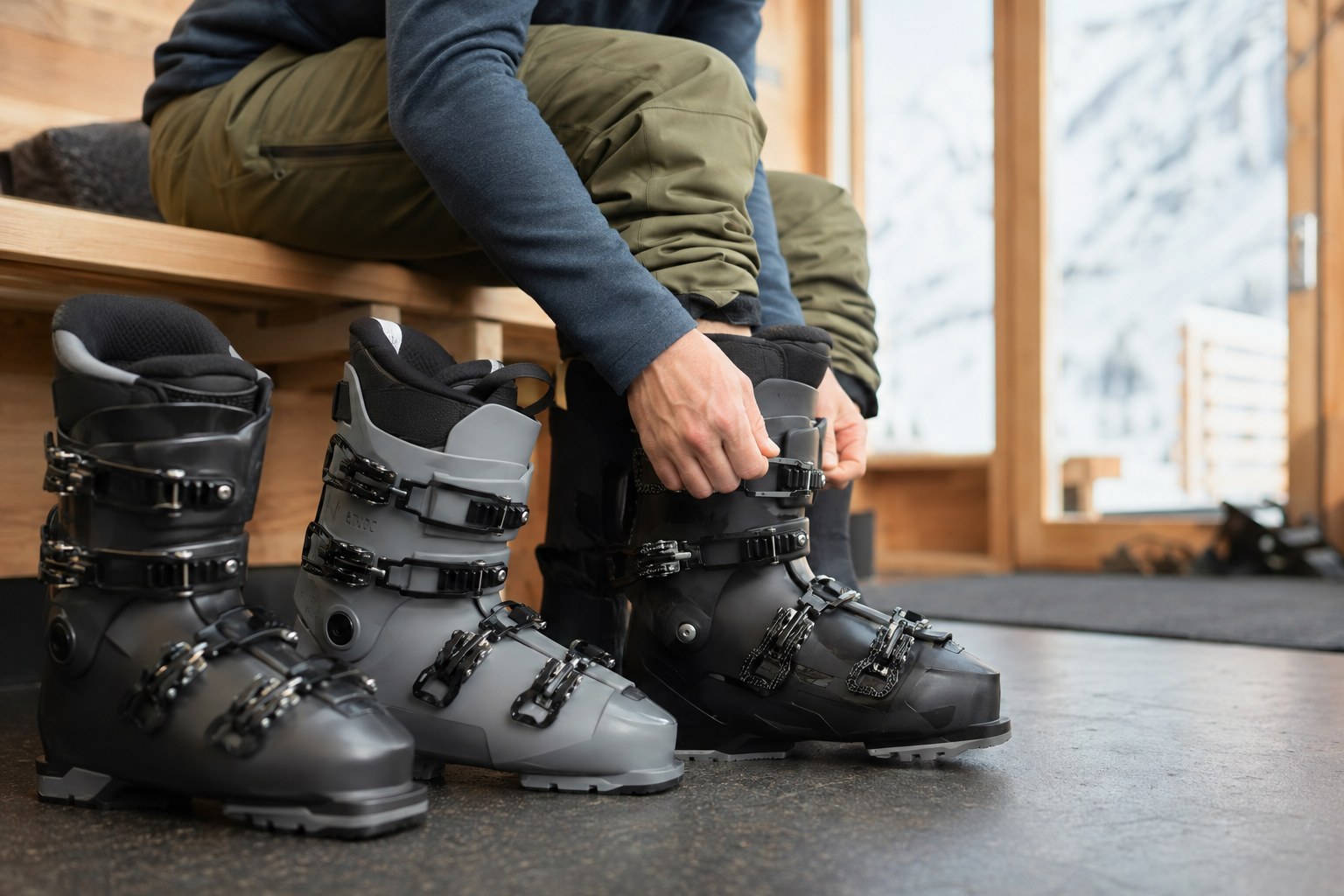
One of the most important pieces of ski equipment that directly affects performance and comfort is the ski boot. Many movements you make on skis are transferred from your feet, ankles and legs to the skis through the boot. Therefore, simply choosing the right number is not enough; ski boot flex value, foot structure, boot width and your ski level should also be evaluated together.
A ski shoe that is too soft or too stiff can make it difficult for the skier to transfer movements correctly. It is not right, especially for beginners, to make a choice based only on the high flex values used by professional skiers. The right ski boots; It is the boot that suits your level, physical structure and skiing style. To get information about other parts of ski equipment, you can also review our guide ski and snowboard equipment selection.
What is the Ski Boot Flex Value?
Flex value is an index value that expresses the stiffness of the ski boot against flexing forward. In general, as the number increases, the boot becomes harder, and as the number decreases, the boot becomes softer.
For example, a boot with low flex moves more easily when forward pressure is applied. A boat with a higher flex value requires more strength and technical control. For this reason, when choosing ski boot flex, one should not act only with the thought of “higher number is better”.
Determine Your Ski Level
The first step in choosing the right ski shoes is to realistically determine your ski level. The boot needs of a beginner in skiing and an experienced skier who performs parallel turns and carving at high speeds are not the same.
Beginning skiers usually start with soft or medium-soft boots in which they can move more comfortably and learn basic stances more easily. As the technique improves, one can switch to harder boots that provide greater sensitivity and power transfer.
Beginner Ski Boot
For people who are just learning skiing, if the boot is too hard, it may make it difficult to move the knees forward and get into the basic skiing position. Therefore, a more flexible structure at the beginner level can provide a more comfortable learning experience for most skiers.
At this level, the goal is not maximum performance; The aim is to learn the basic ski stance, practice stopping and slowing down movements and gain control over the skis.
Intermediate Ski Boot
People who ski in a controlled manner on blue and red tracks, make parallel turns and start using their skis more actively can consider medium-hardness boots.
At this level the skier wants both comfort and more precise control. Therefore, when choosing boots, attention should be paid not only to the flex figure, but also to the stability of the foot in the boot and general fit.
Advanced Ski Boot
Advanced skiers may want faster response from their skis at higher speeds, steep slopes and technical turns. Therefore, harder flex values may be preferred.
However, a ski boot with high flex value is not suitable for everyone. Technical proficiency, physical strength, body weight and skiing style should be evaluated together.
What should be the Flex Value of Ski Boots?
You may encounter different flex values such as 60, 70, 80, 90, 100, 110, 120 and 130 in ski boots. However, these figures are not a universal standard that expresses exactly the same hardness across all manufacturers. For this reason, the following values should be considered as a general selection range, not a definitive rule.
| Ski Level | General Flex Approach | Feature |
|---|---|---|
| Start | Approx. 60–80 | Softer, easier to move and forgiving structure |
| Intermediate | Approx. 80–100 | Balanced structure between comfort and control |
| Advanced | Approx. 100–120+ | More precise power transfer and high performance |
These values can be used as a starting point when making a selection. Even two people at the same skiing level can be more comfortable at different flex values because they have different weight, height, physical strength and skiing style.
Consider Your Body Weight and Physical Structure
When choosing ski boot flex, the physical structure of the person is as important as the ski level. A lighter skier may have difficulty flexing a boot that is too stiff. A heavier or stronger skier can move the boot with the same flex value more easily.
For this reason, you should try the boots on your feet instead of making your choice just by looking at the ski boots your friend uses or a single number on the internet.
Get into a ski position, bend your knees slightly forward and apply controlled pressure to the tongue of the boot with your shins. The boot shouldn’t leave you completely immobile, but it shouldn’t close too easily either.
How Should Ski Boots Fit?
One of the most important points in choosing the right ski shoes is the fit of the boots to the foot. Ski boots should not be as loose as normal casual shoes. It should wrap the foot in a controlled manner but not cause significant pain or pressure.
When you wear the boots, it is important that your heel does not move up and down more than necessary and your foot does not slide left or right in the boot.
What to Consider in the Right Ski Boot?
- The heel should remain as stable as possible in the boot.
- The foot should not move excessively to the right or left in the boot.
- Fingers should not be pinched or numb.
- The boot should hug the foot in a balanced and controlled manner.
- The shinbone should be able to naturally contact the front tongue of the boot.
- Buckles and straps should not be over-tightened to numb the foot.
How to Choose a Ski Boot Size?
Unlike casual shoes, ski boots generally use the Mondopoint measurement system. This system is basically based on the length of the foot in centimeters.
For example, determining the correct size of your foot provides a healthier start when choosing ski boots than just looking at your normal shoe size. It is helpful to measure both feet because there may be slight differences in the length of the two feet.
It is essential to try ski boots before buying or renting them. When first worn, boots may feel tighter than everyday sneakers; However, intense pressure, numbness or pain in the fingers is not the correct fit.
Pay Attention to Ski Boot Width
When choosing ski boots, not only the length but also the width of the foot is important. Two boots of the same size may have different mold widths. While people with narrow feet or wider feet may experience discomfort in tight fit, skiers with thin feet may not be able to provide adequate control in boots that are wider than necessary.
The boot should hug your foot evenly from the sides. Excessive movement of the foot within the boot may cause the commands given to the skis to be delayed and control to decrease.
Wait a Few Minutes After Trying on Ski Boots
It is not right to put on a pair of ski boots and make a decision within a few seconds. After tying the boots, stand for a while, walk in a controlled manner and get into the ski position a few times.
Bend your knees forward and apply pressure to the boot tongue with your shin. Check the movement of the heel, the condition of the toes and the pressure on the lateral parts of the foot.
It is useful to apply the same approach to renting. Especially if you are using ski boots for the first time, check the fit by moving around with the boots for a few minutes before leaving the store.
How Should Ski Boot Buckles Be Adjusted?
The buckles and top straps found in ski boots ensure that the foot is kept in the boot in a controlled manner. However, the idea that buckles should be tightened as much as possible is wrong.
The buckles should hug the foot securely, but should not be so tight that they affect circulation or numb the foot. You may need to readjust the boat during the day.
Especially people who ski for the first time may find it more comfortable if the boots are loose. However, in ski shoes that are too loose, the foot moves and ski control may become difficult.
Do Ski Socks Affect Boot Selection?
When trying on ski boots, it is important to wear the appropriate socks that you will use while skiing. Socks that are too thick or worn on top of each other can fill the inner volume of the boot more than necessary.
Care should be taken to ensure that the socks do not wrinkle inside the boots and do not gather under the foot. In addition, leaving the leg of the ski trousers outside the boot instead of tucking it into the inside of the boot provides a more accurate use.
Is It Better to Use Very Hard Ski Boots?
No. It is not correct to think that a higher flex value automatically means a better ski boot. A boot that is too stiff can make it difficult for a skier who does not have sufficient technique or physical strength to execute the basic ski position.
Correct flex is the level at which the skier can move the boot in a controlled manner and transfer the necessary pressure to the skis. For a beginner skier, a softer boot may provide an advantage, while an experienced skier may gain more precision from a harder boot.
What is the Disadvantage of Too Soft Ski Boots?
As the ski level increases, a boot that is too soft may not provide the support the skier needs at high speeds and in more technical turns. Therefore, as the technique develops, the need for bots may also change.
A flex value that is suitable in the beginning may not be sufficient for a person who does parallel skiing, carving or higher performance skiing in the following years.
Why is the compatibility of ski boots and ski bindings important?
Ski shoes must be compatible not only with your foot but also with the ski binding system to be used. Professional control is especially important in boat and mooring systems with different standards.
In rental ski equipment, bindings must be adjusted in accordance with the skier’s boots, physical characteristics and usage conditions. Therefore, instead of unconsciously changing the binding settings yourself, get support from the equipment personnel.
For more information about the use of ski equipment and basic controls, you can review our content things to consider before starting skiing and snowboarding.
Buying or Renting Ski Boats?
For people who are skiing for the first time or only go on ski holidays a few days a year, renting ski boots can be a practical option. In this process, you can understand which boot type you are more comfortable with by trying different flex and mold options.
For people who ski regularly, owning personal ski boots can provide significant advantages. Consistently using the right boot for your specific foot will help you achieve similar fit and response every ski day.
Mistakes Beginners Make When Choosing Ski Boots
- Choosing loose ski boots as daily shoes,
- Deciding only based on the flex number,
- Choosing boots that are too hard than necessary
- Buying or renting a boat without trying it out,
- Not controlling heel movement,
- Wearing too thick or more than one sock,
- Too tight or too loose the buckles,
- Not taking into account ski level and body weight.
How Does the Correct Ski Shoe Affect Skiing Technique?
A significant part of the pressure and guidance made during skiing is transferred from the feet to the skis. Ski boots that fit the foot correctly and are selected with appropriate hardness help the skier to transfer his movements to the skis in a more controlled manner.
The harmony between the boot and the leg becomes important, especially in techniques such as stopping, slowing down, turning left and right, parallel skiing and carving. However, equipment alone does not create correct ski technique; The equipment needs to be used with proper training.
Ski Boot Selection and Ski Training in Erciyes
If you are going to ski at Erciyes Ski Center for the first time, it is important to check the suitability and flex level of your ski boots before hitting the slopes. Instead of starting ski training directly with inappropriate equipment, preparing boots, skis and other equipment can make the learning process more comfortable.
Subjects such as basic ski stance, contact of the shin bone with the tongue of the boot, correct use of the knees and how to transfer pressure to the skis can be more easily understood during practical training. To get information about professional training, you can review our page Erciyes ski lesson.
Right Equipment and Ski Technique with Legendary Veysel Hodja
In the ski trainings held at Erciyes Ski Center with Legendary Veysel Hodja, you can get practical information about the correct use of ski boots, equipment control, ski posture and ski movements appropriate to your level, as well as basic ski techniques.
For people who are new to skiing or want to improve their technique, a learning program appropriate to their level can be created by evaluating the right equipment and the right training.
Ski Instructor – Legendary Veysel Hodja
Erciyes Ski Resort – Kayseri
Phone / WhatsApp: +90 532 355 08 13