Skiing and snowboarding are sports that require intense physical effort, even though they are performed in cold weather conditions. Continuous exercise of leg, abdominal, back and balance muscles throughout the track; When combined with high altitude, low temperature and long-term activity, the need for energy and fluid during the day should not be ignored. For this reason, energy and fluid balance while skiing should be planned correctly.
In cold weather, thirst may not be as intense as on hot summer days. However, this does not mean that the body does not need fluid. Instead of planning your water consumption throughout your ski day by waiting to be completely thirsty, taking breaks at regular intervals to drink fluids and monitoring your energy level can help you have a more controlled skiing experience.
Why is fluid consumption important while skiing and snowboarding?
During skiing, the body is in constant motion. Sweating may occur under thick ski clothes and fluid loss through breathing continues. Due to cold weather, this loss may not be felt as clearly as in hot weather.
Insufficient fluid consumption may be felt in the following hours, along with fatigue, decreased concentration and decreased physical performance. It is necessary to control your own condition throughout the day, as balance, decision-making and monitoring the environment are important on the track.
Start the Ski Day Without Neglecting Fluid Consumption
Fluid planning for your ski day shouldn’t only start once you hit the piste. Consuming water during breakfast and starting the day with enough fluids is a beneficial habit.
Especially if you are reaching Erciyes after a long car journey, you can make a short preparation instead of directly putting on the equipment and hitting the track. Drinking water, eating light and preparing your body for ski movements can make the start of the day more comfortable.
Drink Water at Regular Intervals, Without Waiting for Thirst
Because the feeling of thirst is less pronounced in cold weather, some skiers can stay on the piste for long periods of time without drinking water. Instead, it may be a better approach to consume liquids by taking short breaks at appropriate intervals throughout the day.
Instead of trying to consume too much water at once, a regular fluid consumption spread throughout the ski day can be preferred. Need; It varies depending on the person’s body structure, activity intensity, weather conditions and the time spent on the track.
Don’t Forget to Take a Break to Drink Water
Taking a short break after doing more than one track is a good opportunity to both drink fluids and evaluate your physical condition. Instead of constantly getting on the chairlift and skiing again, you can add small rest breaks throughout the day.
What Can Be Consumed for Energy While Skiing?
Since physical activity is performed for a long time during skiing, energy needs throughout the day should also be taken into account. Instead of very heavy meals, foods that can be consumed more easily before skiing and during breaks can be preferred.
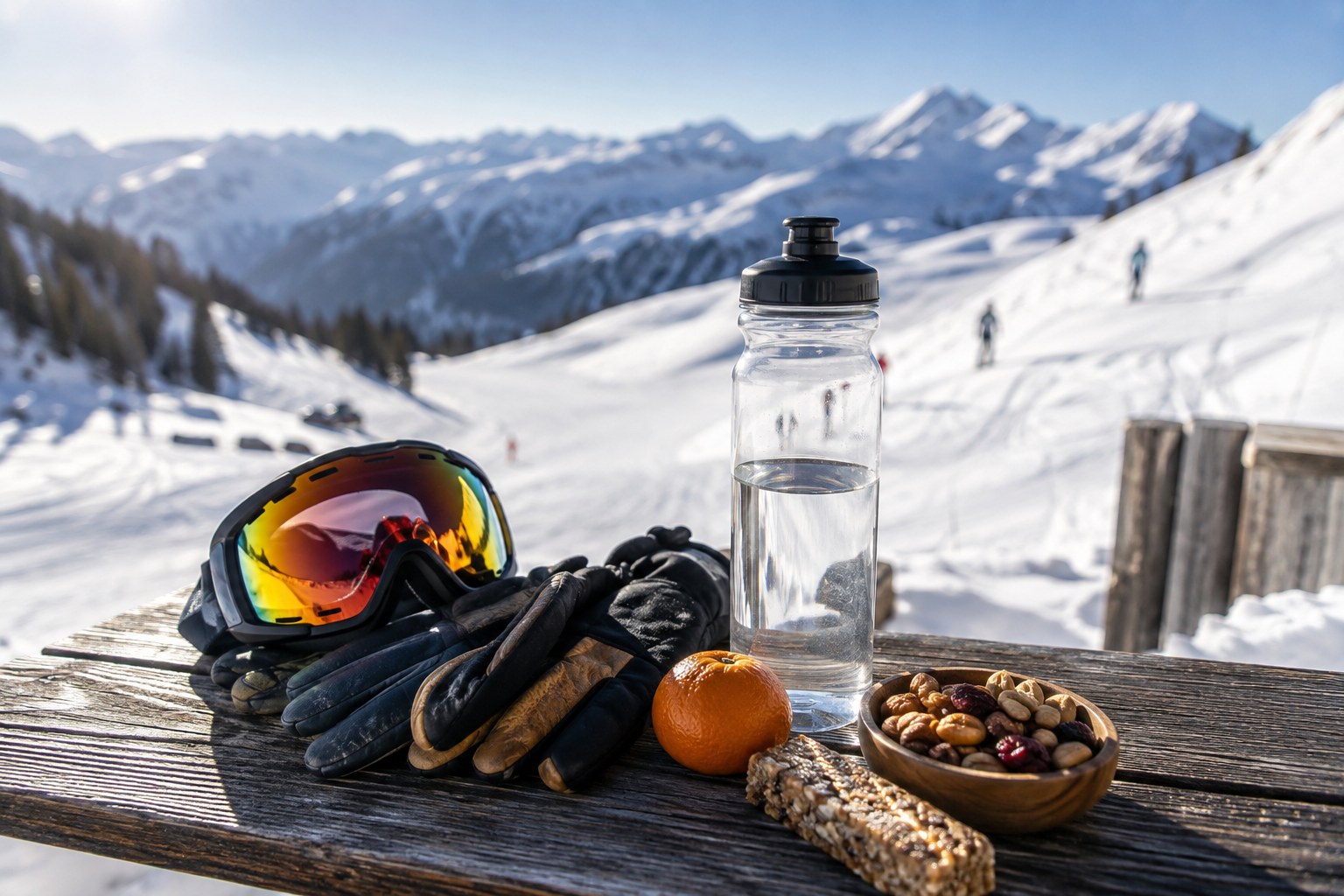
Depending on your personal nutritional needs, you can keep small portions of nuts, fruits or similar practical snacks with you. In Veysel Hoca’s track experience, it is recommended to have small energy sources along with water during the ski day.
Practical Snacks to Add to Your Ski Bag
- Dried nuts such as almonds, hazelnuts or walnuts,
- Dried fruits,
- Banana or easy-to-carry fruits,
- Small energy snacks suitable for personal needs,
- Easily portable snacks for long ski days.
If you have food allergies, diabetes, or a special diet, you should follow your own healthcare professional’s recommendations rather than general recommendations.
Avoid Heavy Meals Before Skiing
Consuming a very heavy meal right before hitting the track may cause discomfort during movement in some people. Instead, it may be more comfortable to start the ski day with a balanced breakfast and choose smaller snacks as needed throughout the day.
A feeling of oversaturation can reduce comfort, especially when considering ski boots, thick clothing and a constantly forward active ski stance.
Monitor Yourself More Closely at High Altitude
Erciyes is a high altitude ski resort. Especially people coming from low altitude regions may feel tired more quickly than they are used to during physical exertion in the first days.
Therefore, instead of pushing your performance on the first ski day, you can start on tracks suitable for your level, take regular breaks and follow the signals your body gives.
If you are just starting out in skiing, learning controlled techniques can also reduce your unnecessary energy expenditure. You can create a training program suitable for your level by getting information about Erciyes ski lesson.
Your Skiing Technique May Affect Energy Consumption
Beginning skiers can often experience more unnecessary muscle tension than experienced skiers. Constantly contracting the body due to fear, leaning back, or using more force than necessary to control the skis may cause you to get tired more quickly.
In the correct skiing stance, the knees are kept flexible, the body is positioned balanced and the movements are made as controlled as possible. As the technique improves, the skier can start to move more fluently and more economically on the same track.
To Avoid Wasting Unnecessary Energy
- Do not lean back on the ski.
- Do not lock the knees completely.
- Do not keep your body in a constant state of contraction.
- Do not speed above your level.
- Use turns in a controlled manner.
- Take a break when you feel tired.
Don’t Skip Warm-Up Exercises
Instead of starting the ski day without preparing the body, a short warm-up routine that activates the ankle, knee, hip and leg muscles can be applied. Thus, in the first tracks, a gradual start is made instead of forcing the body into intense movements at once.
Controlled squatting with ski shoes, short walking, basic ski stance and joint movements are among the preparations that can be applied before hitting the piste.
To get more information about equipment and track preparation along with warming up, you can review our content rules to be considered before starting skiing and snowboarding.
Don’t Switch to More Difficult Tracks When You Get Tired
Your physical performance in the first hours of the ski day may not be the same as your performance in the afternoon. As leg muscles become tired, it may become difficult to maintain skiing position, react to sudden situations, and execute turns with the same precision.
Therefore, if you start to get tired as the day progresses, you can choose tracks that are suitable for your level and that you can control more easily, instead of switching to a more difficult track.
It is necessary to avoid accelerating at speeds beyond your control, especially when you are seriously tired with the thought of “let me ski one last time”.
Can Coffee and Hot Drinks Replace Water?
Hot drinks can be an enjoyable option during ski breaks in Erciyes. However, instead of planning your fluid consumption only through tea, coffee or hot drinks during the day, it is a more balanced approach to continue consuming water as well.
You can keep water available throughout the day as one of your staple beverages, especially instead of consuming lots of caffeinated beverages.
Avoid Skiing After Alcohol
Skiing and snowboarding; It requires balance, coordination, attention and quick decision making. For this reason, it is not a safe approach to go to the track after consuming alcohol.
Especially when combined with high altitude and physical exertion, you should not make risky decisions thinking that you feel better than you are. Prioritize safety on a ski day.
How Do You Understand Low Energy?
You may notice that your performance decreases significantly during the day, that you cannot control your movements as much as before, or that you begin to lose concentration. These may be signs that you need to take a break.
When you feel tired, instead of continuing to strain your skiing technique, rest in a safe area, drink fluids and have a snack according to your needs.
Situations When You Should Consider Taking a Break
- Significant fatigue in the legs,
- Decreased control during turns,
- Decrease in concentration,
- You start making more mistakes than usual,
- Dry mouth or feeling of intense thirst,
- Feeling weak.
Don’t Mistake Dizziness or Severe Headache as Normal Fatigue
Symptoms such as headache, dizziness, nausea or significant fatigue at high altitude should not be considered just normal ski fatigue. Especially if the symptoms are severe or do not improve with rest, it is necessary to seek health support instead of continuing physical activity.
It is not right to continue skiing with the thought of “let’s do a few more slopes” when you have a significant health problem.
Water or Sports Drink on a Ski Day?
Water can be the main source of fluid for most people during daily physical activities of normal duration and light-to-moderate intensity. During long-term and intense sports activities, a person’s nutritional and fluid needs may differ.
Therefore, it is not right to recommend the same amount of sports drinks or electrolyte products for everyone. If you are a professional athlete, train for a very long time, or have a special health condition, it is more appropriate to create your personal nutrition plan with expert support.
A Simple Energy Plan for a Ski and Snowboard Day
| Time | What Can Be Done? |
|---|---|
| Pre-Ski | Balanced breakfast, fluid consumption and short warm-up |
| First Tracks | Starting at a tempo appropriate to the level |
| Intermission Breaks | Consuming water and checking physical condition |
| If Energy Drops | Rest and have a small snack suitable for your needs |
| As the Day Progresses | Lowering the track and tempo level according to fatigue |
Fluid and Break Scheme on Children’s Ski Day
Because children focus on having fun while skiing, they may not always spontaneously indicate that they are thirsty or tired. Therefore, it is important for families and educators to monitor that children take regular breaks.
Instead of aiming for the child to ski continuously throughout the day, rest, fluid and, if necessary, snack breaks can be added between short training and ski sections.
Runway Safety and Energy Management Are Not Separate
Physical fatigue of the skier can also affect his control on the track. Therefore, safe skiing is not just about wearing a helmet and obeying piste signs; Knowing your physical limits is also part of safety.
To get information about other rules that must be applied on the track, you can review our guide What should we pay attention to when skiing on ski and snowboard tracks?.
Use Your Energy Correctly While Skiing in Erciyes
In order to have a full ski day at Erciyes Ski Center, the aim should not be to ski non-stop from morning to evening. Choosing a track suitable for your level, correct skiing technique, regular breaks, adequate fluid consumption and a balanced diet can help you have a more enjoyable day.
It is more beneficial, especially for beginners, to divide the ski day into sections rather than exhausting all their energy in the first hours. As the technique improves, unnecessary muscle use may decrease and you can start to move in a more controlled manner.
Controlled and Enjoyable Skiing with the Legendary Veysel Hodja
In the ski trainings held at Erciyes Ski Center with Legendary Veysel Hodja, basic stance, balance, stopping, slowing down and turning techniques can be worked on according to the person’s level. Learning the correct techniques helps you use your body more controlled while skiing.
You can contact us to get information about ski training, tracks, equipment and your ski holiday in Erciyes.
Ski Instructor – Legendary Veysel Hodja
Erciyes Ski Resort – Kayseri
Phone / WhatsApp: +90 532 355 08 13