One of the first techniques learned by beginners in skiing is the snow plow. Snow plow; It makes it easier to learn stopping, slowing down and basic turning movements. However, as the mastery of skiing improves, the next important stage is to move on to the parallel skiing technique. So, how to do parallel skiing and what should be taken into consideration when switching from snow plow to parallel turn?
In parallel skiing, the skis move more parallel to each other for a significant part of the turn. The skier speeds up not only by opening the back of the skis; Begins to control the turn line, weight transfer, edge use and correct body position. This transition should be made without haste, after the basic techniques have developed sufficiently. Those who want to get professional support in Erciyes can review our page Erciyes ski lesson.
What is Parallel Skiing?
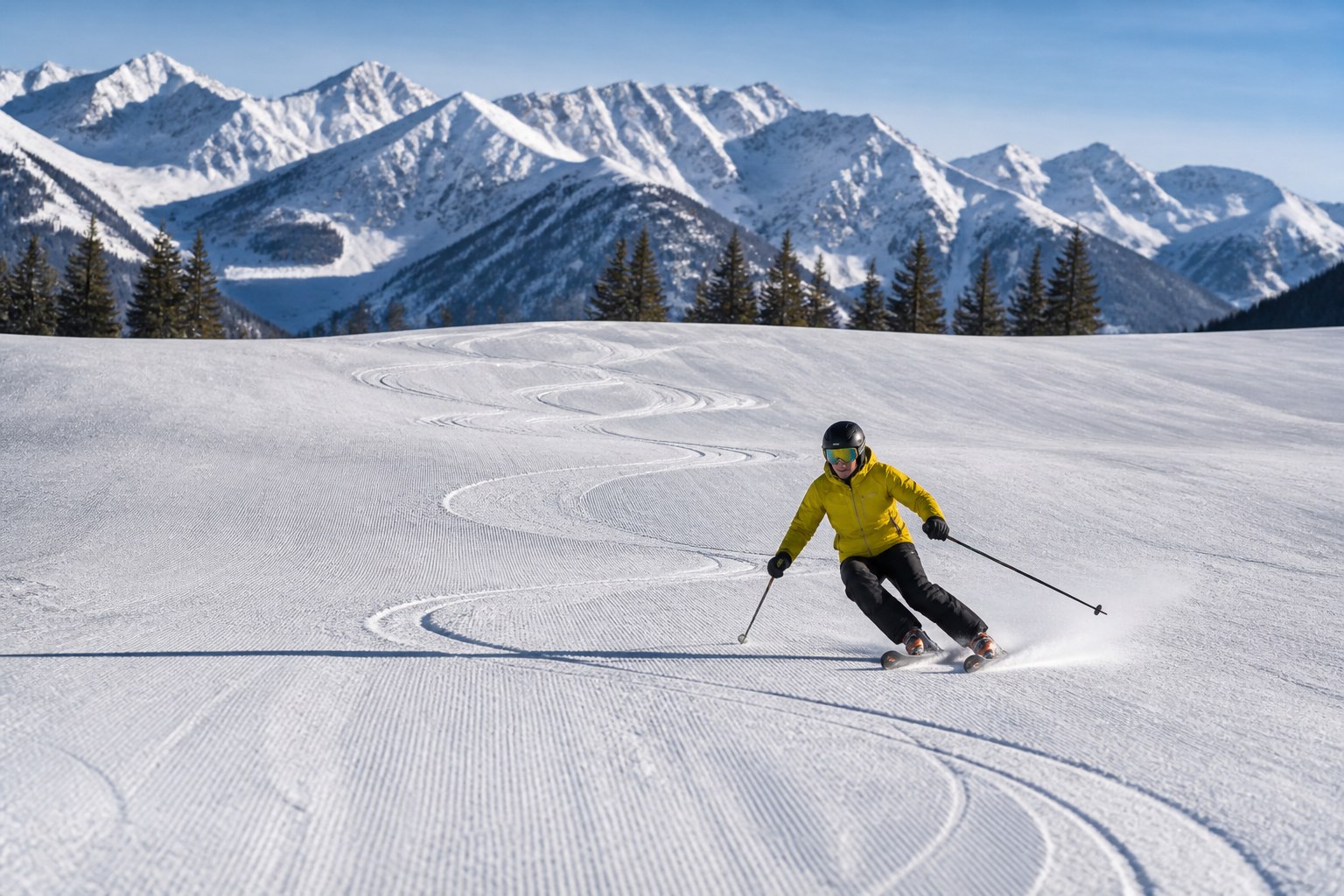
Parallel skiing is a skiing technique in which skis move largely parallel to each other during turns. In the snow plow, the front ends of the skis approach each other, while the rear ends form an open “V” shape. In parallel skiing, the direction of the two skis becomes more compatible.
Thanks to this technique, the skier can make smoother turns, determine his line on the track with more control, and prepare for more advanced techniques such as carving at later levels.
However, the purpose of switching to parallel skiing is not just to bring the skis side by side. The main thing is to learn the coordinated use of the body, feet, knees and ski edges.
First, Gain Control of the Snow Plow
Before switching from snow plow to parallel skiing, the basic movements must be learned sufficiently. The skier must be able to control his speed on low and medium slope areas, stop at any point and make controlled turns left and right.
If a skier who cannot yet control the movements of the snow plow tries to ski directly parallel, technical errors may become permanent. For this reason, it is important to develop basic ski mastery first.
Beneficial Movements to Do Before Switching to Parallel Skiing
- Slowing down in a controlled manner with a snow plow,
- Standing safely with a snow plow,
- Ability to make left and right turns,
- Being able to manage your speed with turns,
- Being able to stand balanced on skis,
- To be able to slide on slightly inclined tracks without panic.
Create the Correct Parallel Ski Stance
The basis of parallel skiing technique is a balanced body position. The knees should not be completely straight or locked. It should be kept slightly bent and ready to move. Ankles should also be active enough to adapt to ski movements.
A balanced position with the shin in slight contact with the front tongue of the ski boot can make it easier to control the skis. The body should not be tilted forward or backward more than necessary.
In the Correct Ski Position
- Knees are slightly bent.
- Ankles are used actively.
- The body is in a balanced position.
- Hands are held forward and relaxed.
- The gaze is directed towards the direction of travel, not towards the ski tips.
- A controlled and central stance is maintained on the skis.
Start Reducing Snow Plow Turns
The transition from snow plow to parallel turning does not happen overnight for most skiers. In the first stage, the snow plow position can be gradually reduced and the skis can be brought closer together in the later part of the turn.
For example, you can start the turn with a slight snow plow position and make the skis more parallel by moving the inner ski closer to the outer ski as the turn is completed. When this movement is repeated in a controlled manner, the transition to parallel position becomes more natural.
The aim here is not to force the skis to stick together, but to ensure that the two skis move more harmoniously during the turn.
Learn to Use Outdoor Skiing More Effectively
The outside ski plays an important role during parallel turning. The weight distribution of the body changes depending on the direction of rotation and the outer ski generally carries more load.
For example, when turning left, the right ski is in the outside ski position. When turning right, the left ski becomes the outside ski. Learning to use the outside ski in a controlled manner helps the skier make turns more balanced.
However, this does not mean that the entire body weight is forcibly transferred to a single ski. The aim is to create a controlled and natural weight distribution.
Make the Inner Ski Parallel to the Outer Ski
One of the important movements in the transition from snow plow to parallel turning is the controlled approach of the inner ski to the outer ski during the turn. The inner ski, which remains open in the snow plow position, begins to move more in the same direction as the outer ski over time.
In the early stages, the skis may not need to be completely parallel throughout the turn. As the skier improves his technique, the parallel position may begin to occur earlier in the turn.
It is important that this transition occurs without difficulty. Instead of pulling the feet together harshly, the aim is to ensure that the knees, ankles and skis naturally come in the same direction through weight transfer.
Connect Right and Left Parallel Turns
Being able to make a single parallel turn is not enough. In order to develop control over skiing, right and left turns must be connected to each other in a controlled manner.
As a turn is completed, the skis briefly return to a more stable position. Then the switch is made to the new direction of rotation. During this process, keeping the knees and ankles flexible makes the transition between turns easier.
It is useful to keep the turns wide in the first studies. As the technique improves, the radius and rhythm of the turns can be changed according to the skier’s level.
How to Control Speed in Parallel Skiing?
When switching to parallel skiing, speed control is not done only by putting the skis in braking position. The shape of the turns and the route followed on the track become important.
Sliding steeply down the track may cause rapid increase in speed. Instead, creating a wider line on the track by making controlled turns to the right and left helps manage the speed.
Completing the turn further towards the hillside can also help reduce speed. Thus, the skier learns to control his speed using the turning technique instead of just braking.
Use Ski Edges in Control
The edges located on the bottom and sides of the skis interact with the snow surface during rotation. As parallel skiing develops, it becomes more important for the skier to use these edges in a controlled manner.
Movement of the ankles and knees in accordance with the direction of rotation allows the edges of the skis to work more controlled on the snow. However, it is not right for beginners to try to lean the skis too much.
First of all, balanced parallel turns should be developed, and then the use of edges should be increased gradually.
Do Not Turn Your Torso Unnecessarily
One of the common mistakes made when learning parallel skiing is to turn the entire body hard to the right or left to make a turn. In ski turns, movement is not created only from the shoulders.
Feet, ankles, knees and legs play an active role in steering the skis. The aim is to keep the upper body as balanced and controlled as possible.
Excessive rotation of the shoulders can disrupt balance and make transitioning to the next rotation difficult.
Turn Your Gaze in the Direction You Want to Go
People learning to ski often tend to constantly look at their skis. It is common to look down to check whether the skis are parallel to each other, especially during the transition to parallel turning.
However, constantly looking at the tips of the skis can reduce visibility on the piste and distort the body’s position. Instead, direct your gaze in the direction where the turn will continue and to the safe area ahead.
Beginning to feel the position of the skis without seeing them over time is one of the important stages that show the development of ski mastery.
Repeat on gently sloping tracks
It is not necessary to go on a piste as difficult as possible to learn parallel skiing. For technical work, areas with a wide and controlled slope suitable for your level can be much more productive.
Performing repetitions at a low or medium slope gives the skier more time to think about their body movements. As technique improves and speed control improves, practice can be done on different tracks.
To get information about the safety rules that should be applied on ski and snowboard slopes, you can review our content What should we pay attention to when skiing on ski and snowboard slopes?.
Exercises for Transition from Snow Plow to Parallel Ski
Parallel skiing technique is the combination of multiple basic skills rather than learning a single movement. Therefore, some simple exercises can ease the transition process.
1. Snow Plow Narrowing Exercise
When skiing with a snow plow on a low slope, reduce the rear clearance of the skis in a controlled manner. Then return to the light snow plow position. This exercise helps you get used to the skis approaching parallel position.
2. Parallelization at End of Turn
Start the turn with the snow plow and bring the inner ski closer to the outer ski in the last part of the turn. Repeat alternately on the right and left side.
3. Linked Return Study
Connect right and left turns in a certain rhythm. Focus on completing each turn and starting the next turn in a controlled manner.
4. Outdoor Ski Balance Exercise
Try to feel the pressure on the outside ski during the turn. However, avoid uncontrolled movements on one ski. If possible, this exercise should be done under the supervision of a ski instructor.
Most Common Mistakes in Parallel Skiing
| Error | Right Approach |
|---|---|
| Leaning back | Maintaining a balanced and active ski position |
| Forcibly bringing the skis together | To provide a natural transition with weight transfer and rotation movement |
| Making the entire turn with the shoulders | Actively using foot, knee and leg movements |
| Continuously looking at the tips of the skis | Turning the gaze towards the direction of rotation and movement |
| Accelerating without control | Managing speed with line of turns |
| Going onto the track above the level | Improving the technique at the appropriate slope |
How Long Does It Take to Learn Parallel Skiing?
The time it takes to learn parallel skiing varies from person to person. Having skied before, balance, coordination, physical condition, age and training may affect this process.
While some skiers can switch from snow plow to parallel turn in a short time, some people may need to repeat basic techniques for a longer period of time. The important thing here is not how many hours you skate parallel, but how controlled you can perform the movement.
Instead of trying to learn the technique in a hurry, repeating the correct movements creates a much more solid skiing technique at later levels.
What Track Level is Suitable for Parallel Skiing?
Parallel turns are generally started on low or medium slope slopes where the skier can maintain control. Blue tracks and controlled areas appropriate to the person’s level may be suitable for basic exercises.
Being able to skate parallel alone is not enough to switch to a red or black track. The skier must be able to safely control his speed, turns and stance on different slopes.
Current snow and weather conditions on the track may also change the difficulty level. Therefore, you should decide not only based on the color of the track, but also on current conditions and your own level.
Are Parallel Skiing the Same Thing as Carving?
No. Although parallel skiing and carving are related, they are not the same technique. In parallel skiing, skis can turn parallel to each other and a certain amount of sliding movement can be used.
In the carving technique, a cleaner and curved turning line on the snow is aimed by making more effective use of the edges of the skis. Therefore, carving is a more advanced stage that should be studied after the parallel skiing technique and the use of edges have been sufficiently developed.
Is it necessary to give up the snow plow completely?
Switching to parallel skiing does not mean that the snow plow will never be used again. Snow plow action can still be used in some situations where low speed is required or in controlled areas.
However, as the skiing level improves, the turns on the normal piste slide become increasingly parallel, allowing the skier to move more fluidly and in control.
Using Baton in Parallel Skiing
As parallel skiing technique progresses, the use of poles can support the rhythm and timing of turns. The purpose of the baton movement is not to pull the body or put all the weight on the baton.
Correct baton use can help make turns more rhythmic, especially at intermediate and advanced levels. However, if you are just learning basic parallel turns, your priority should be to improve foot, knee and body coordination.
Does the Correct Ski Equipment Affect Parallel Turning?
Having the ski boots fit correctly and the skis being level-appropriate can help you perform ski movements in a more controlled manner. Skis that are too long or not suitable for the level may make it difficult for beginners to turn.
To get more information about equipment selection, you can review our guide ski and snowboard equipment selection.
Parallel Ski Training in Erciyes
Before starting parallel ski training at Erciyes Ski Center, the current level of the skier can be evaluated. Once sufficient control is achieved in the snow plow, stopping, slowing down and basic turns, work can be done on reducing the size of the snow plow, paralleling the inside ski and associated parallel turns.
As the technique improves, weight transfer, edge control, baton use and more fluid turns can be included in the training program. In this way, the skier can progress from beginner to intermediate and advanced levels in a more controlled manner.
Transition from Snow Plow to Parallel Skiing with the Legendary Veysel Hodja
In the ski trainings carried out at Erciyes Ski Center with the legendary Veysel Hodja, technical exercises can be planned according to the person’s current level. While beginners are developing snow plow, stopping and turning techniques; For skiers who gain sufficient control in these movements, parallel turning exercises can be started.
Improving your skiing technique with the right movements helps you ski more controlled and enjoyable on the slopes. You can get information about ski training suitable for your level, from beginner to parallel skiing and more advanced techniques.
Ski Instructor – Legendary Veysel Hodja
Erciyes Ski Resort – Kayseri
Phone / WhatsApp: +90 532 355 08 13